
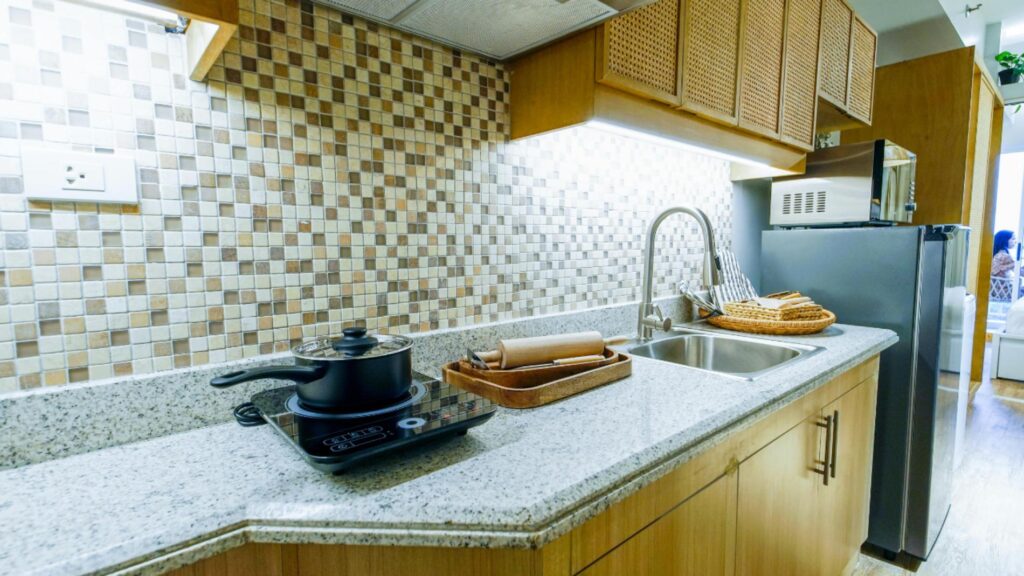
Edge profiles don’t usually get much attention early in a project. Most of the focus stays on the material, the color, and the layout, and the edge ends up being decided quickly toward the end. That tends to make it feel like a minor detail, even though it’s one of the few parts of the countertop you interact with every day.
What an Edge Profile Does
At its simplest, the edge profile is the shape of the exposed edge of the countertop, but it affects more than just appearance. It changes how the surface feels when you lean against it, how light catches along the edge, and how the material holds up over time. A sharper profile reads differently than a softened one, even when the slab itself doesn’t change.
Common Edge Styles
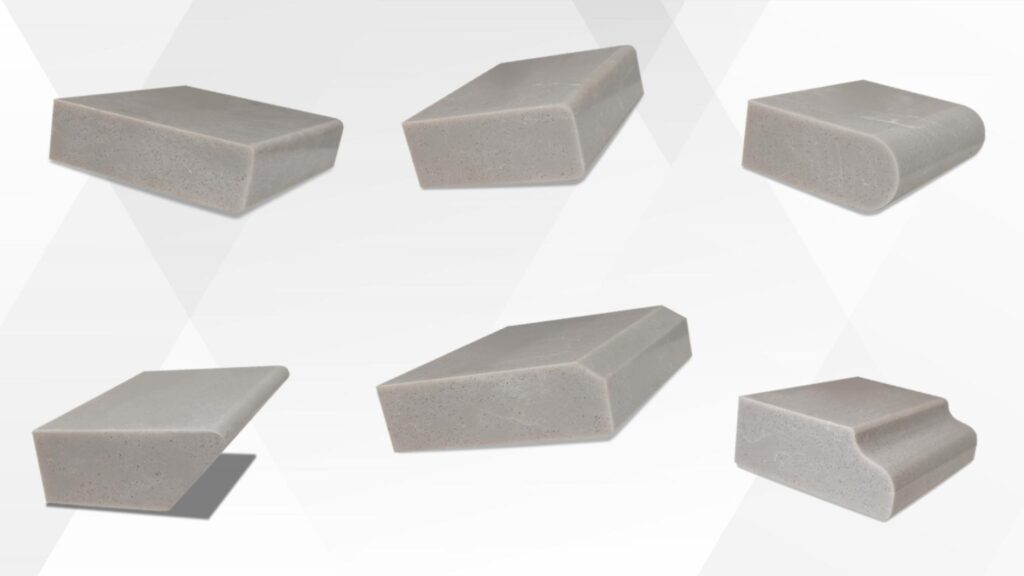
Most kitchens end up using a small group of standard profiles. An eased edge is the most common because it’s clean and slightly softened without drawing attention. A beveled edge adds a bit more definition with a subtle angle along the top. A half bullnose rounds over the top edge while keeping the bottom flat, which softens the look without fully committing to a rounded profile. A full bullnose continues that curve from top to bottom and creates a softer feel overall. An ogee edge introduces more detail and tends to show up in more traditional spaces where that level of shape fits the rest of the design.
How It Affects Daily Use
Edge profiles aren’t just a visual choice. Sharper edges can show wear more quickly in areas that get a lot of use, while softer edges tend to be more forgiving over time and less likely to chip. Comfort also comes into play. In kitchens where people gather around an island or lean on the counter, a slightly rounded edge tends to feel better over time than something more defined.
Matching the Edge to the Space
The edge should work with the rest of the kitchen rather than standing apart from it. Simpler profiles tend to fit better in cleaner, more minimal spaces, while more detailed edges can work in traditional kitchens if the rest of the design supports it. If cabinetry, hardware, and other elements already carry a lot of detail, a simpler edge usually helps keep the space from feeling too busy.
Material Considerations
Not every edge profile translates the same way across materials. Natural stone, quartz, and porcelain all behave differently during fabrication, and some profiles depend on thickness or the way the material is handled. This is usually worked through during the selection process, but it still plays a role in what makes sense for a given project.
When the Decision Happens
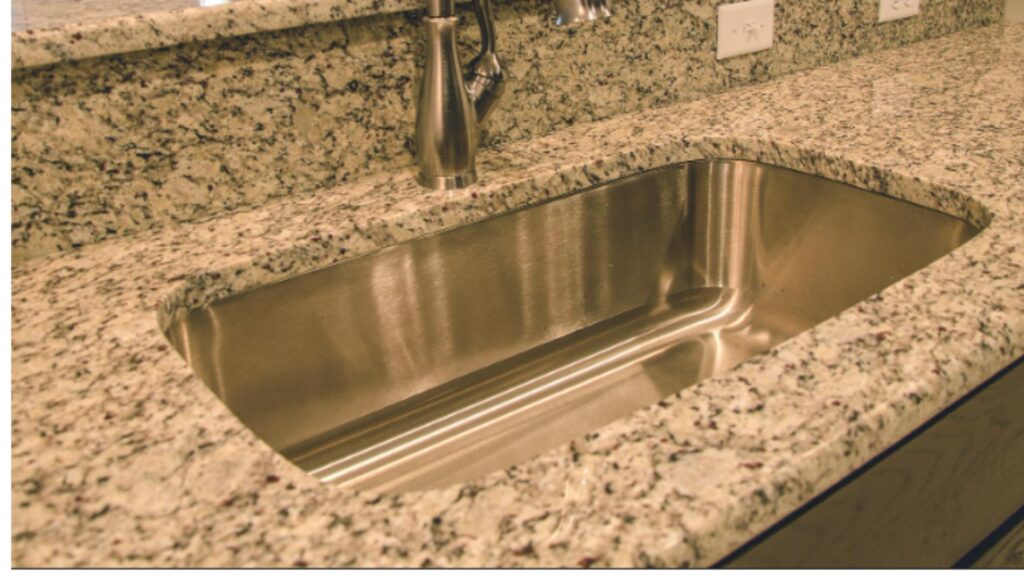
Edge profiles are typically finalized around the time of templating or layout, once the material and overall direction of the kitchen are already set. At that point, the edge becomes a finishing decision that ties everything together, rather than something that needs to be figured out from scratch.
Final Thoughts
Edge profiles don’t take up much space in a conversation, but they show up constantly once the kitchen is in use. They affect how the countertop feels, how it wears, and how it fits into the overall design. Taking a little more time to think through that choice usually leads to a result that feels more complete once everything is installed.




