
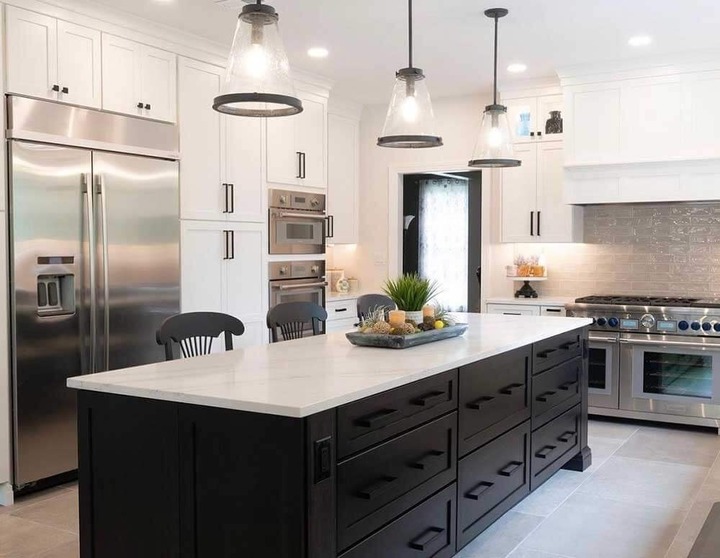
Summer has a way of making people finally do something about the kitchen they’ve been thinking about all year. More time at home, more cooking, more people moving through the space. If a refresh has been on the list, this is usually when it moves up.
For a lot of homeowners, the question isn’t just what countertop to choose. It’s how the countertop, the backsplash, and the floor all work together. Getting those three things to feel cohesive takes a little planning, but it’s not complicated once you understand what each surface is doing.
Why Emerstone Quartz Makes a Good Starting Point
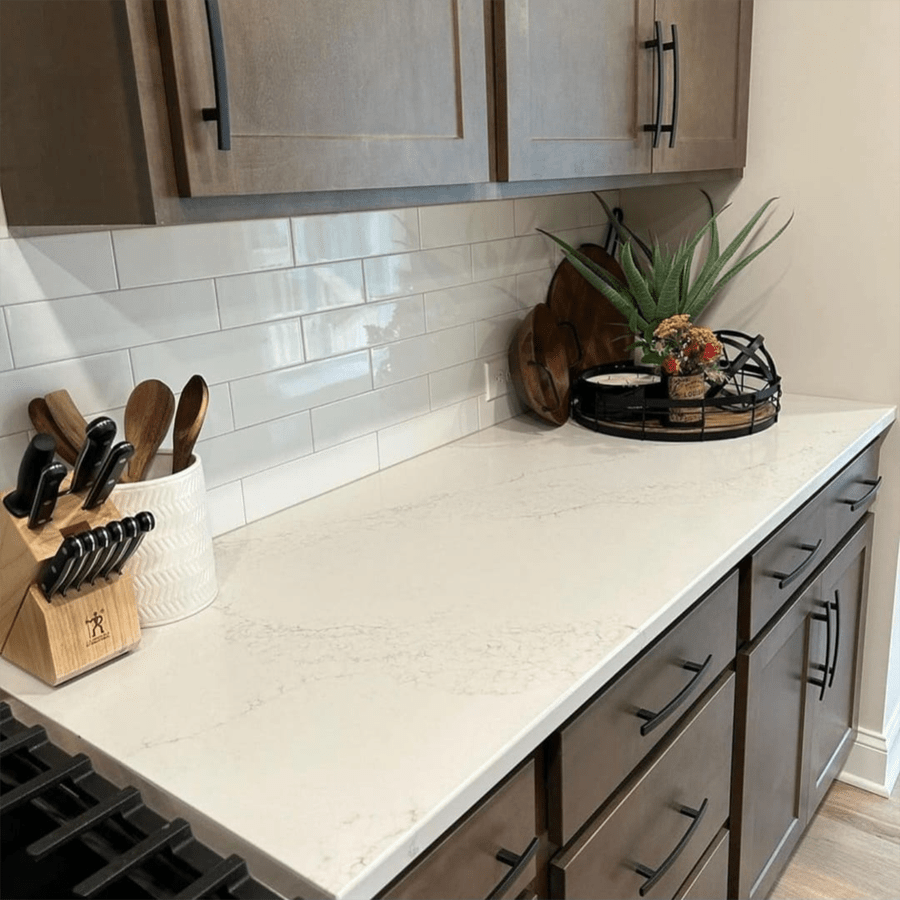
Most designers will tell you to choose your countertop first, then build the tile selections around it. That’s good advice, and Emerstone quartz makes it easy to follow.
Emerstone is an engineered quartz with high quartz content, a nonporous surface that doesn’t need sealing, and a range of neutral tones with subtle patterning. It’s not trying to be the most dramatic thing in the room. What it does well is hold a space together. The consistent coloration gives you a reliable foundation, and the clean look means it works with a wide range of tile styles without fighting for attention.
For summer kitchens especially, that low-maintenance quality matters. No sealing, no worrying about what gets spilled during a cookout, no special products. You wipe it down and move on.
How Tile Fits into the Picture
Once the countertop tone is established, tile choices become more straightforward. You’re essentially deciding how much contrast you want and where you want the eye to go.
A lighter quartz paired with a handmade ceramic backsplash in a warm white or soft cream keeps the whole kitchen feeling airy and open, which tends to work well in summer. If you want something with more presence, a matte rectangular tile in a clay or warm gray tone adds depth without pulling the room in a heavy direction.
For floors, large-format porcelain in a concrete or stone look tends to coordinate well with the neutral palette that Emerstone sits in. It’s practical for a kitchen that gets real use, and it keeps the visual noise low so the countertop reads clearly.
The grout choice also matters more than most people expect. A tinted grout that’s a shade or two warmer than the tile can pull a whole palette together in a way that’s hard to achieve any other way
Thinking About the Full Project
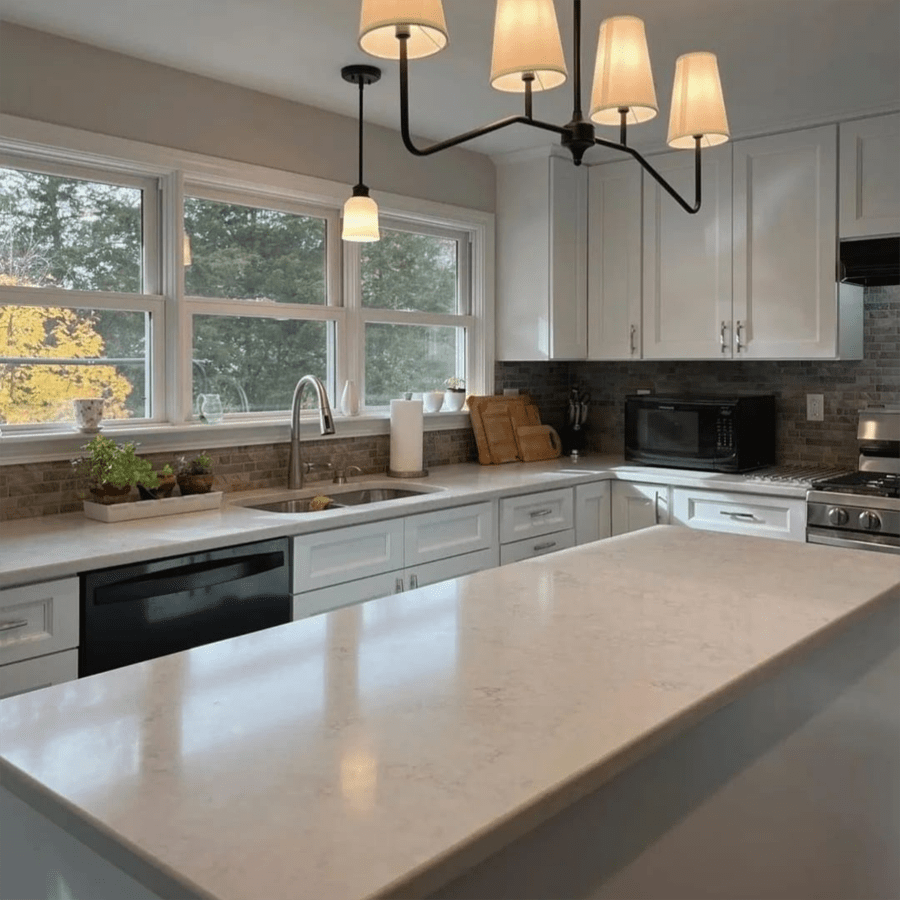
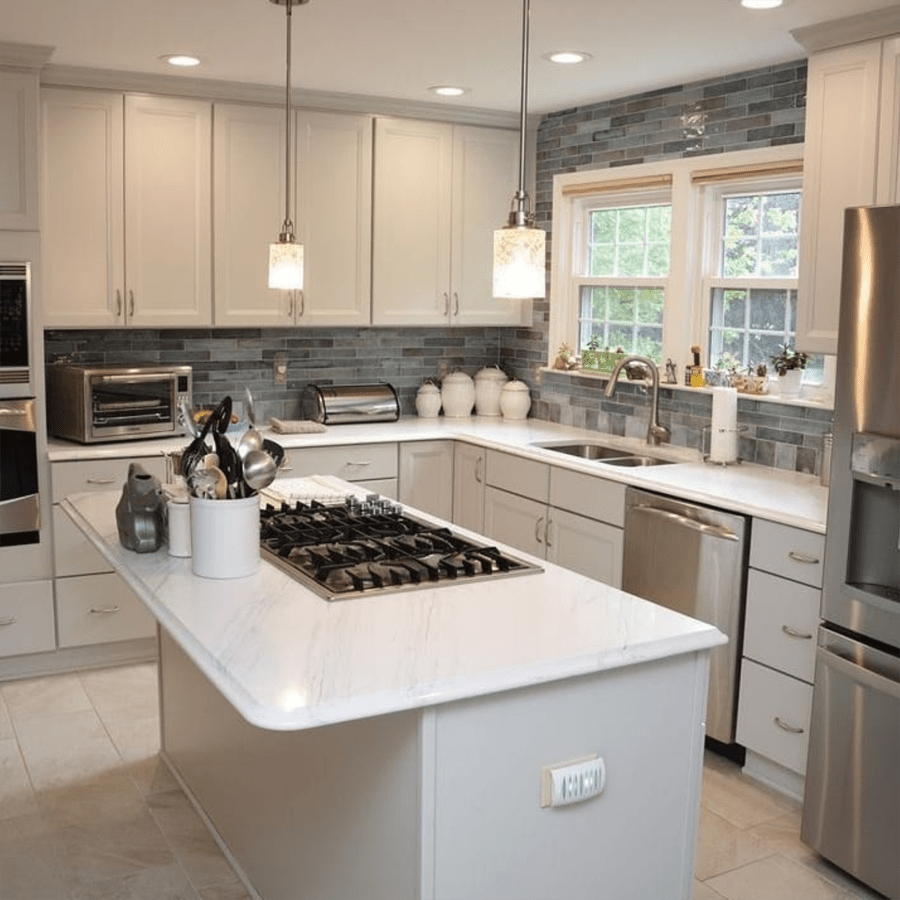
One of the more practical advantages of working with Rumford Stone is that tile installation doesn’t have to be a separate conversation with a separate contractor. Through their partnership with Capital Tile and Marble, tile work is coordinated alongside the countertop project. Layout, scheduling, and material transitions are planned together so the finished kitchen actually looks like it was designed as a whole, not assembled in pieces.
That coordination is more useful than it might sound. When countertop seams, tile grout lines, and edge profiles are planned at the same time, the result feels intentional. When they’re not, small misalignments have a way of showing up in the finished room.
Starting the Conversation
If summer has you thinking about a kitchen update, starting with the countertop and tile combination gives every other decision in the room something to respond to. Rumford Stone can help you work through both at the same showroom, with countertop fabrication and tile installation coordinated through their partnership with Capital Tile and Marble.




