
Soapstone is often chosen because it does not look or behave like every other countertop material. It has a soft, natural appearance, and it changes gradually with use. Instead of staying exactly as it looked on installation day, soapstone develops variation, character, and patina over time.
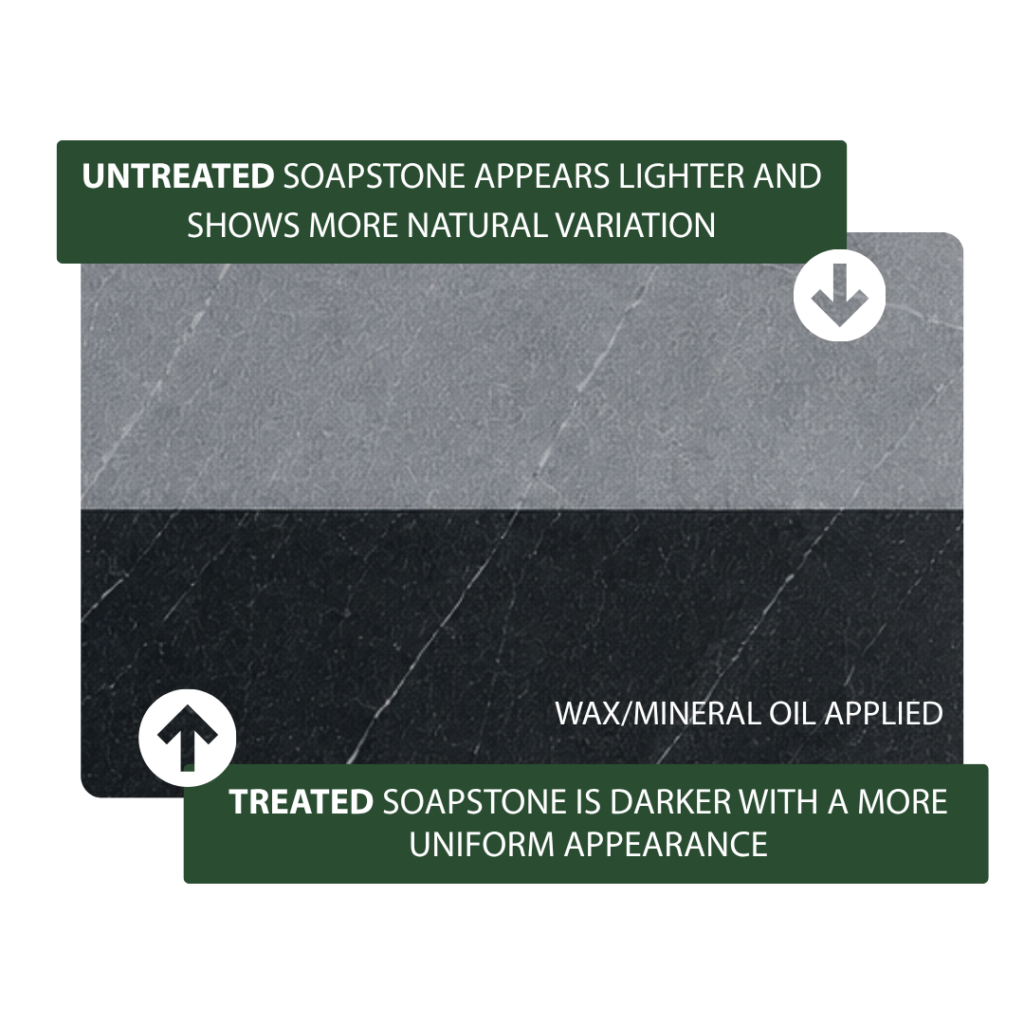
One of the decisions homeowners make with soapstone is whether to apply mineral oil or soapstone wax. Treatment is optional. It does not seal the stone or protect it from damage. Its purpose is visual. Mineral oil or wax darkens the surface and creates a deeper, more even appearance.
Some homeowners love that darker look right away. Others prefer to leave soapstone untreated and allow it to change naturally. Both choices are valid, but they create different expectations for how the countertop will look at installation and how it will age.
A Lighter, More Varied Appearance
Untreated soapstone is lighter than soapstone treated with mineral oil or wax. Depending on the slab, the veining, movement, and tonal variation may also be more noticeable in its untreated state.
The surface may not stay the exact same color across the entire kitchen. Areas that are touched or used frequently can darken sooner than quieter sections of the countertop. Water, cooking oils, fingerprints, and everyday contact may temporarily deepen the color in certain spots. Some marks fade as moisture dries, while others gradually become part of the patina that develops with regular use.
That variation is part of untreated soapstone. It does not mean something is wrong with the material. Over time, the contrast usually softens as the countertop continues to age.
What Is Patina?
Patina is the natural change in a material’s appearance as it is used. With soapstone, daily contact gradually deepens the color and softens the contrast between individual marks, scratches, and areas of heavier use.
Many people are drawn to patina because it gives the countertop a lived-in quality. Think of a well-used wooden cutting board, an old leather chair, or a piece of furniture that becomes more distinctive over time. The surface reflects how the home is used rather than remaining unchanged.
For homeowners who love soapstone, that evolution is often part of the appeal.
How Mineral Oil or Wax Changes the Look
Applying mineral oil or soapstone wax darkens the stone and creates a more uniform appearance. The change can be significant, especially when comparing treated and untreated areas of the same material.
Some homeowners choose to treat soapstone during fabrication or installation because they prefer the darker color from the beginning. Others want to see the stone untreated first, or they would rather let it darken naturally over time. Treatment can also be added later if preferences change.
It is worth noting that oiling or waxing only changes the color of the stone. It does not make soapstone harder or more resistant to scratching. Scratches may simply show up less on treated soapstone because the surrounding surface is darker, not because the stone itself is tougher.
Oiling or waxing is also not a one-time step. The treatment wears off gradually with washing and everyday use, so a treated countertop needs to be re-oiled or re-waxed periodically to maintain the darker, even look. If it is not reapplied, the color will fade back toward its natural state and may do so unevenly, depending on how different areas of the countertop are used.
It is also important to understand that treating soapstone later may not make every part of the countertop look identical. Areas exposed to natural oils, water, and frequent use may have already darkened at different rates. The stone will also continue to develop its own patina after mineral oil or wax is applied.
What Untreated Soapstone Means for Seams
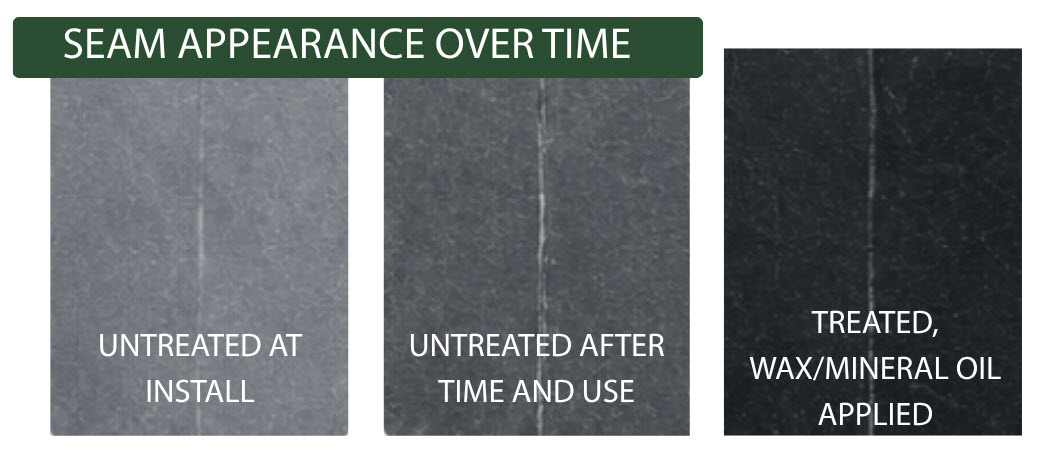
Seams are typically more visible when soapstone is left untreated. Rumford Stone uses a color-matched epoxy selected to blend with the stone as it appears at the time of installation. If the surrounding soapstone darkens while the seam remains lighter, the contrast may become more noticeable.
Applying mineral oil or wax later can deepen the color of the stone around the seam, but the epoxy will not change in the same way. Because of that, the seam may continue to stand out as the countertop evolves.
This is one reason it helps to talk through treatment preferences before fabrication and installation. The decision affects more than the overall color of the stone. It can also influence how seams, marks, and areas of frequent use appear over time.
Everyday Marks and Changes
Water rings, fingerprints, cooking oils, and other signs of daily use tend to be more noticeable on untreated soapstone, especially when the countertop is new. These marks can temporarily darken the surface and may look uneven because different areas of the kitchen are used in different ways.
The area near a sink may develop differently than a serving area. A busy prep space may darken faster than the end of an island. Cup rings and moisture marks may also be easier to see before the stone has developed a more established patina.
Soapstone is actually one of the more stain-resistant natural stones available, since it is non-porous and does not absorb liquids the way other natural stones can. What homeowners notice early on is not staining. It is the stone darkening slightly from oil and moisture contact, the same process that builds patina over time.
Scratches and Natural Wear
Soapstone is softer than many other countertop materials, so surface scratches should be expected. On untreated soapstone, those scratches may be easier to see while the surface is still light and before the countertop has developed more patina.
One advantage of soapstone is that scratches can often be sanded out. Light sanding with fine sandpaper or steel wool will typically buff a scratch away and restore a smoother surface. This is something many other countertop materials, like quartz or granite, do not allow in the same way.
With time, individual marks often become less visually prominent as the surrounding stone changes too. The surface takes on a more lived-in character instead of maintaining a completely uniform finish.
For some homeowners, that is one of soapstone’s strengths. Others may prefer a countertop material that changes less over time. Neither preference is wrong. The important part is understanding how soapstone behaves before choosing it for your home.
Choosing the Appearance That Fits Your Home
Leaving soapstone untreated is not a lack of maintenance, and applying mineral oil or wax is not a required protective step. The choice is primarily about appearance.
Untreated soapstone begins lighter, shows more natural variation, and develops its color gradually through use. Treated soapstone begins darker and usually appears more uniform, although it will still age and develop a patina of its own. To keep that darker, more even appearance, oil or wax will need to be reapplied periodically.
At Rumford Stone, we talk through these expectations because the treatment decision affects how the material looks at installation and how seams, marks, and frequently used areas may appear later. Soapstone is a natural material that changes with the home around it. Knowing what to expect makes it easier to decide whether you want a darker, more even appearance from the beginning or would rather allow that change to happen naturally over time.




