
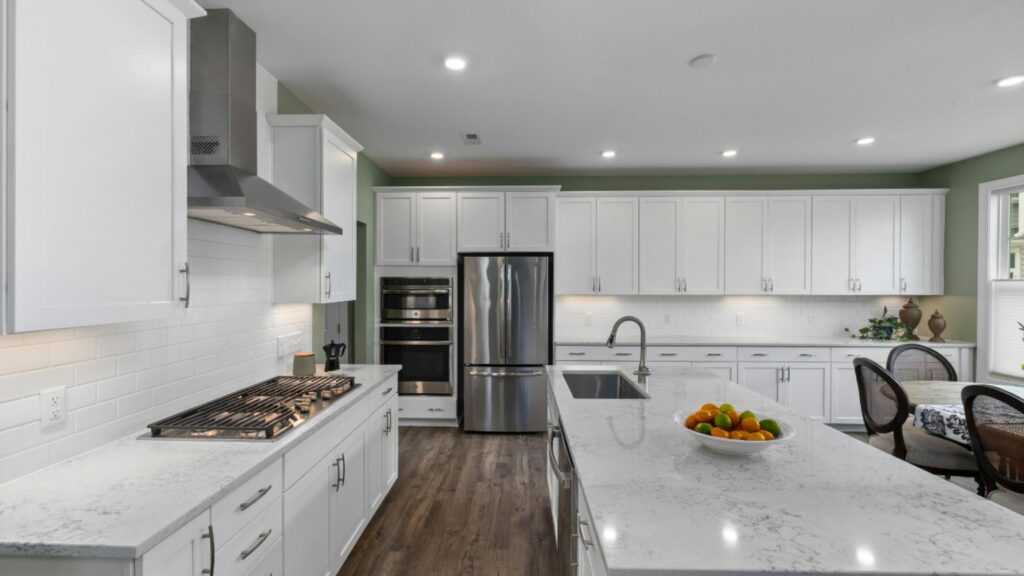
Marble has always been part of kitchen design, but for a stretch of time it wasn’t the first material people asked about. Durability and consistency took priority, and materials like quartz filled that role. Granite stayed steady for the same reasons it always has. Lately, though, the conversation has shifted. More homeowners in Manchester, New Hampshire are circling back to marble, not because it’s easier, but because they understand what it offers and what it requires.
What Draws People to Marble
There’s a reason marble keeps coming back into the conversation. It doesn’t look like anything else.
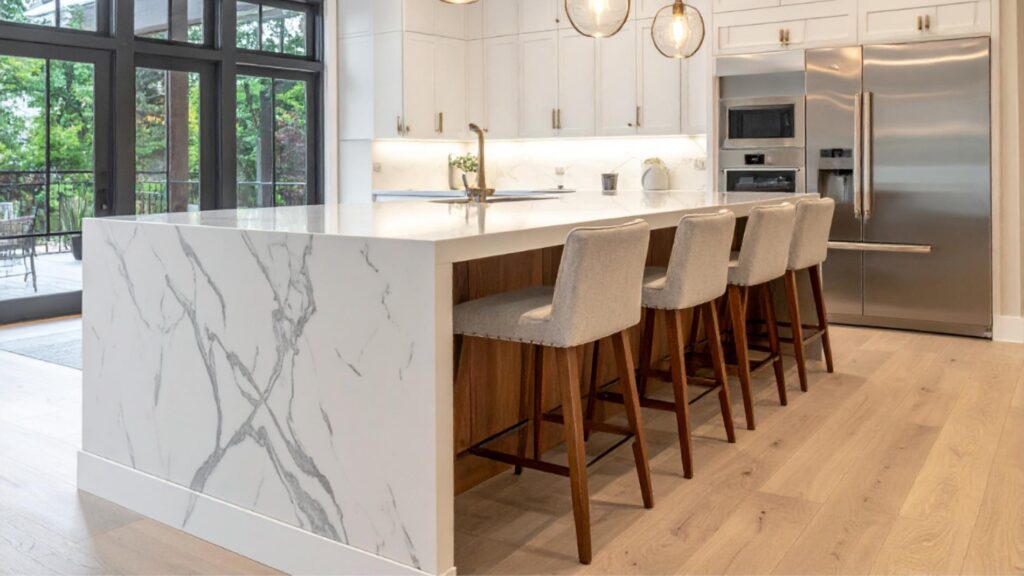
The veining is softer and less repetitive than most engineered materials, and it doesn’t try to mimic consistency. Every slab is different, which gives the finished space a more natural feel. In kitchens that are trying to avoid looking too uniform, that variation makes a noticeable difference.
It’s not just about appearance, either. Marble has a certain visual depth that doesn’t rely on bold pattern or contrast. It reads quieter, even when there’s movement in the stone.
What You Need to Understand Going In
Marble performs differently than other surfaces, and that’s usually the turning point in the decision.
It reacts to acidic materials like lemon juice, vinegar, and wine. When that happens, it can leave behind a dull spot in the finish. That’s called etching. It’s not a stain that can be cleaned off, it’s a change to the surface itself.
Some homeowners are completely fine with that. Over time, the surface develops a patina that reflects how the kitchen is used. Others prefer a surface that stays more consistent, and for them, marble can feel like the wrong fit.
There isn’t a right answer here, but there is a right expectation.
How It’s Being Used
Not every homeowner using marble is installing it across the entire kitchen.
In many homes around Manchester, it shows up in more focused areas. Islands are a common choice because they allow the material to stand out without taking on the full workload of the kitchen. Baking sections come up often as well, since marble stays naturally cooler and those areas tend to see less exposure to oils and acidic ingredients.
Some kitchens do use marble throughout. That usually reflects how the space is used day to day and how comfortable the homeowner is with the material changing over time.
Comparing It to Other Materials
Marble often gets compared to quartz or quartzite, but those comparisons don’t always tell the full story.
Quartz offers consistency and lower maintenance. Quartzite provides a natural look with more durability. Marble sits in a different category. It’s chosen for how it looks and how it ages, not because it performs better under heavy use.
Looking at it strictly from a performance standpoint tends to miss why people are drawn to it in the first place.
The Role of Planning
With marble, planning matters more.
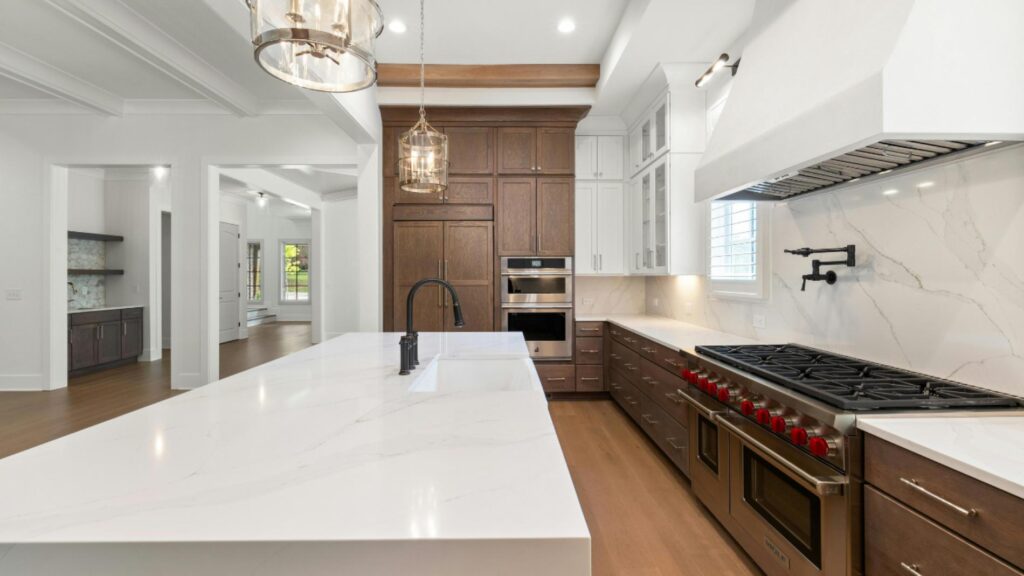
Slab selection, layout, and seam placement all affect the final result. Because the material has natural variation, those decisions show up clearly once everything is installed.
That’s why slab viewing and layout approval tend to be a bigger part of the process. It gives homeowners a chance to see how their specific slab will be used before anything is cut.
Final Thoughts
Marble isn’t the easiest surface to live with, but that’s not why people choose it.
They choose it because it looks like natural stone, behaves like natural stone, and changes over time in a way that feels authentic to how the space is used.
For many homeowners in Manchester, that tradeoff makes sense.




